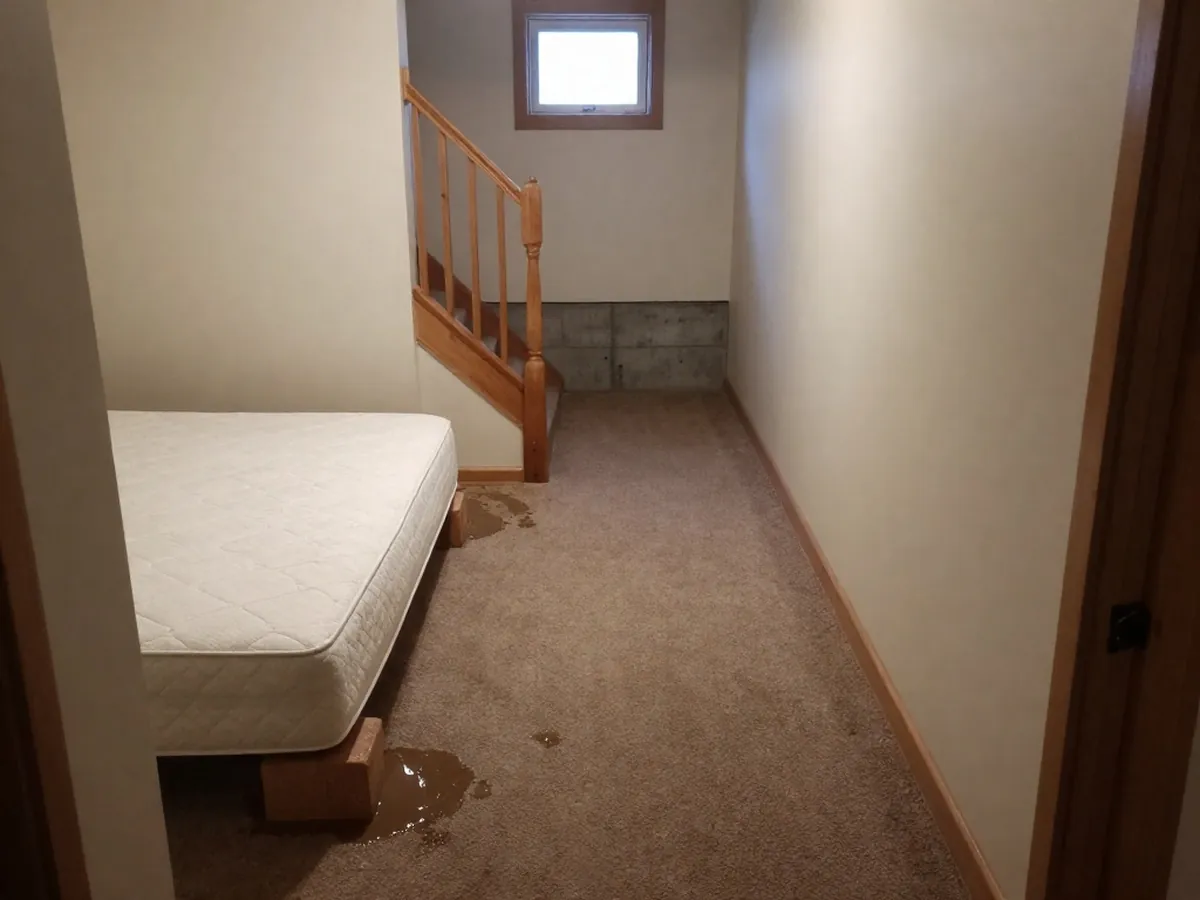
In Smyrna, water in a basement or crawl space might trace back to heavy rain, a sump pump that quit, a cracked foundation or a plumbing line. Standing water in the lower level? Call (678) 679-5538 and give the depth and what you think caused it.
See the paired job: Flooded basementsRoof leaks and wind-driven rain in Smyrna
Storm Leaks and Roof Water Damage in Smyrna, GA
After a hard rain, a roof leak in Smyrna can show itself through damp attic insulation, a ceiling stain or water around a window frame. The stain may sit far from the spot where the water got in. Did the storm leave a wet room? Call (678) 679-5538 and describe where it showed up.
Checked 1 Nov 2026
Get out and get help if
- Downed or sagging power lines: treat every one as live and stay far back. Phone Georgia Power, 1-888-891-0938, or 911.
- Water reaching outlets, cords or the panel means staying out. A buzz or a burnt smell is the signal to leave and phone 911 or Georgia Power.
- A ceiling soaked by the storm can sag and drop: keep off the floor below, keep children away, and phone 911 if it comes down.
- Run generators outdoors only, well away from doors, windows and vents, and not in a garage or on a porch; CDC puts the distance at 20 feet. Phone 911 if anyone feels sick.
Cobb County notes
Hurricane Helene dropped an estimated 8 to 10 inches of rain on Cobb County in September 2024, National Weather Service radar showed. Three gauges on the Chattahoochee reached Major Flood Stage, and in Vinings a water rescue took place.
Georgia Power says a damaged meter or service entrance gets no power back until an electrician repairs it. After that, 1-877-749-3931 arranges the reconnection.
Georgia's insurance commissioner suggests photographing or filming damage before temporary repairs, keeping receipts for those repairs and holding off on permanent repairs until an adjuster has inspected.
A tarp, battens and a fallen branch
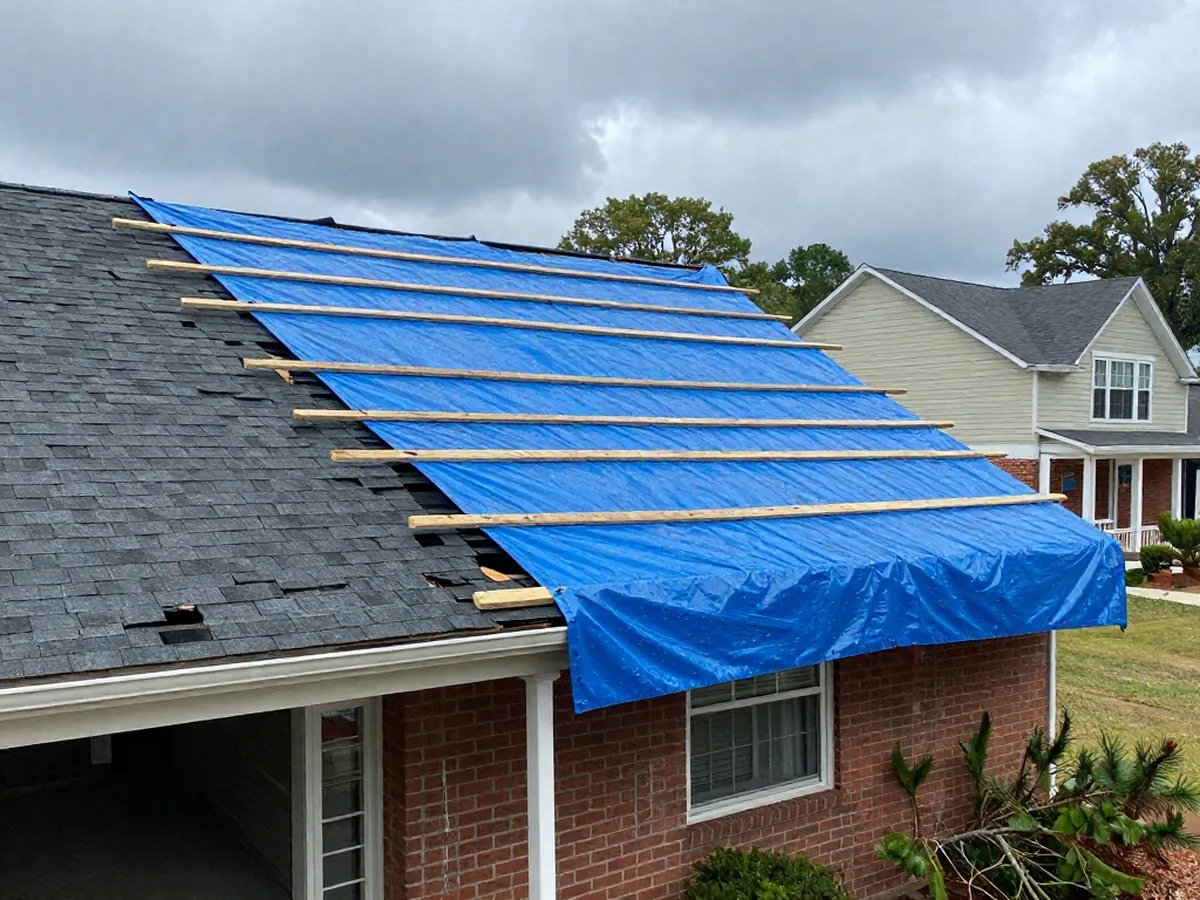
A blue tarp is secured with wooden battens over a damaged patch of shingles on a 1950s brick ranch with a carport, with a pine branch down in the yard and wet shingles under clearing clouds. A tarp is a stopgap over the opening. It does not repair the roof, and water that already got in still has to be found and dried inside.
Gather these first
Gather these from a dry spot before the call. Nothing here asks you to step into water, lift an appliance or open a wall.
- Stay on the ground and study the roof line and gutters. Binoculars help; do not climb a ladder or onto the roof in wet weather.
- Photograph every wet spot inside, then shoot the roof and yard from the ground and note the date.
- Jot down the date of the storm, where the water got in and what it reached, so your insurer gets a clear account.
- A meter or service wire that looks damaged is for Georgia Power and an electrician; stay back from it.
Where storm water travels
Rain gets in at shingles, at flashing around a chimney, vent or skylight, at a window seal or past a gutter that overflows. From there it runs along rafters and wiring, soaks attic insulation and shows up as a stain on a ceiling several feet away.
Questions to ask about a storm leak
- Where did the water get in, and how far did it travel through the ceiling and walls?
- How is the work split between drying and cleanup on one side and roof repair on the other?
- What can dry among the wet insulation, ceiling material and flooring, and what has to go?
- Who covers the opening in the meantime?
- How are moisture readings used to decide when a ceiling can be closed?
Storm cleanup missteps
- Climbing up in the rain to look
- Wet shingles and a ladder make a fall risk, and the check works from the ground.
- Going near anything touching a downed line
- Georgia Power's advice treats any downed line as live and life-threatening.
- Starting permanent repairs before an adjuster looks
- Georgia's insurance commissioner says a claim may be denied when permanent repairs come before the damage is inspected.
Roof work is a separate job
Drying and cleanup is one kind of work and roof repair is another. Smyrna's Building Division counts structural demolition, and projects involving two or more trades, as permit jobs; phone (678) 631-5387 before a repair opens a wall. Rules for all three towns covers the other offices.
Often travels with
Rain in: Wet basements and storm leaks
Pages behind these facts
- National Weather Service Atlanta, County Impacts Associated with Hurricane Helene (2024)
- Georgia Power, Power Restoration Process
- Georgia Office of Commissioner of Insurance and Safety Fire, Insurance Claim Tips
- Centers for Disease Control and Prevention, Safety Guidelines: Reentering Your Flooded Home (updated 24 Aug 2026)
- American Red Cross, Checking Your Home's Structure
- City of Smyrna, Building Division