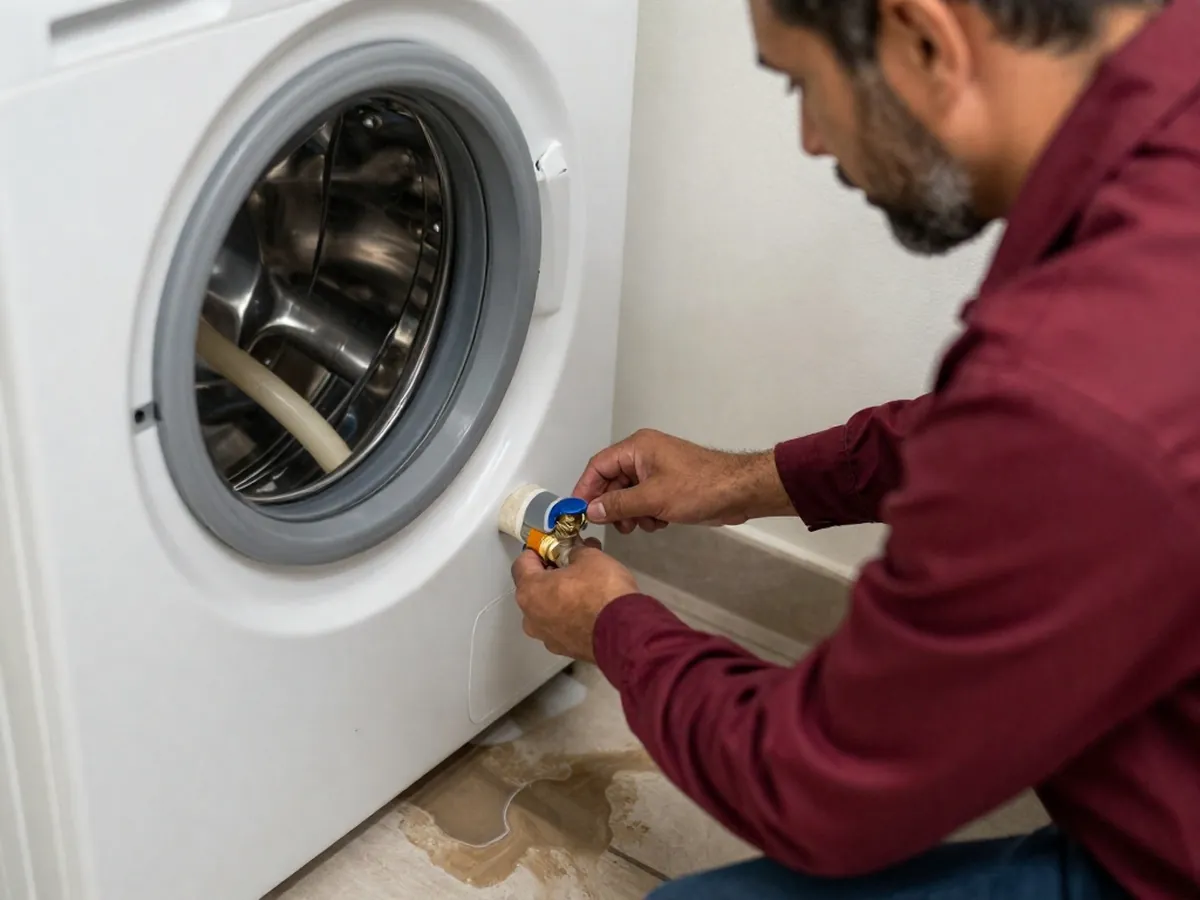
A washer hose, a dishwasher line, an ice maker tube or a tired tank can all let go in a Smyrna house, and the water often travels well past the appliance before anyone sees it. Puddle by the washer? Call (678) 679-5538, name the machine and say how long water has been coming out.
See the paired job: Appliance leaksMusty rooms and dark spots after a Smyrna leak
Mold After Water Damage in Smyrna, GA
After water damage in a Smyrna home, mold often announces itself with a musty smell or dark speckling on a wall, ceiling or baseboard that was wet at some point. It lives on moisture. Spots where a leak used to be? Call (678) 679-5538 and say when the area got wet.
Checked 1 Nov 2026
Get out and get help if
- A wet spot beside outlets, cords or the panel means keeping out. Sparks or a burnt smell mean getting outside and phoning 911 or Georgia Power.
- A soaked ceiling that bulges or drips may come down: stay off the floor below and keep children away. Phone 911 if it does.
- If the water was sewage, count the whole room as contaminated and keep children and pets out. Phone Smyrna's sewer line at (770) 431-2850.
- Carbon monoxide comes off generators, gas pumps and pressure washers, so they stay outdoors and away from doors and windows; phone 911 if anyone feels ill.
Cobb County notes
The 24 to 48 hour mark is EPA's target, in its mold guide, for getting water-damaged areas and items dry. Cleaning up mold without dealing with the water, it warns, will most likely bring the mold back.
EPA's indoor humidity goal is a reading under 60 percent, ideally somewhere from 30 up to 50. A humidity meter from a hardware store can read it.
What the scraper is cutting into
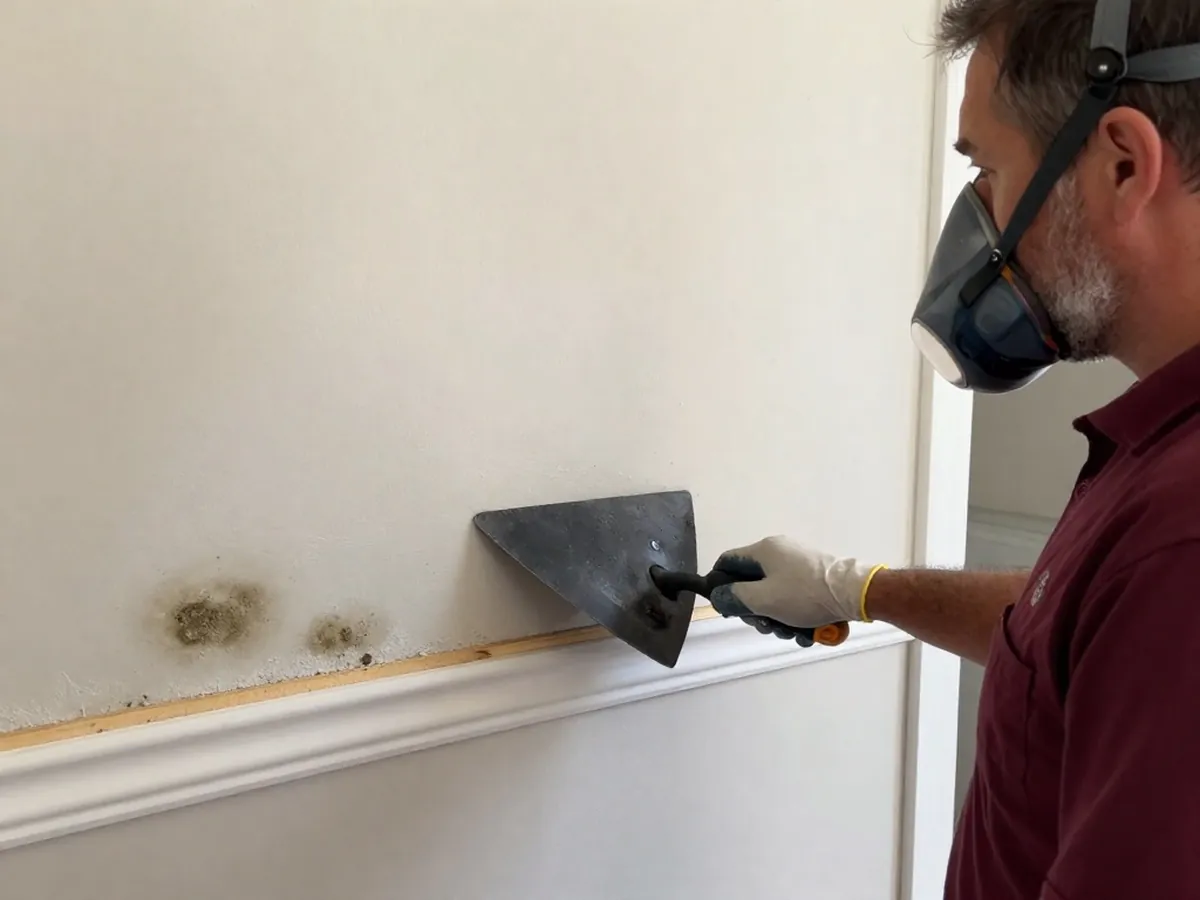
In the photo, kitchen drywall and baseboard have been cut away. The back of the board and a wood stud are speckled with dark spots, and a technician wearing an N95 respirator and gloves scrapes at them under a work light. Mold can show on the hidden side of a wall first, so a clean-looking surface may sit over a wet cavity.
Gather these first
Gather these from a dry spot before the call. Nothing here asks you to step into water, lift an appliance or open a wall.
- Watch for dark speckling, a musty smell or damp patches, and take photos. Leave them alone: no scrubbing, sanding or wiping.
- If you own a humidity meter, read it in the damp room and write the number down.
- Record the date and the source, which might be a leak, a spill or rain, along with whether the area ever dried completely.
- If water reached the HVAC system, leave it off. EPA's flood guidance says not to run any part that flood water touched.
Where moisture hides after a leak
Drywall paper, wood studs, baseboards, carpet and ceiling tile all take on water. EPA lists ceiling tiles and carpet as absorbent materials that may be headed for the trash once mold sets in.
Hard, nonporous surfaces are the easier ones to clean and dry.
Questions to raise about dark spots
- Has the water source been found and stopped?
- How is the area behind the spotting measured for moisture?
- How large is the affected area? EPA's cleanup page draws a line at about 10 square feet.
- Which materials, like ceiling tile or carpet, are headed for the trash?
- How is a wet HVAC system handled before it is switched back on?
Where mold work goes sideways
- Cleaning the spots and skipping the leak
- EPA says the mold will most likely return when the water problem stays.
- Painting over dark spots
- EPA's cleanup page rules out paint or caulk on moldy surfaces, and adds that paint over mold is likely to peel.
- Leaving damp carpet in place
- EPA's flood page says mold can grow on carpet and drywall left wet for more than 24 hours.
Who may open a wall, and who checks the license
Smyrna's Building Division does not mention mold on its permit page, though it lists interior demolition. Phone (678) 631-5387 first. Which Georgia license applies is a fair question for the contractor, and the lookup steps are in rules for each town.
Often travels with
Slow leaks: Appliance trouble and the damp it leaves
Pages behind these facts
- U.S. Environmental Protection Agency, Mold Cleanup in Your Home (updated 4 Jun 2026)
- U.S. Environmental Protection Agency, A Brief Guide to Mold, Moisture and Your Home (updated 18 Feb 2026)
- U.S. Environmental Protection Agency, Flood Cleanup to Protect Indoor Air and Your Health (updated 18 Mar 2026)
- Centers for Disease Control and Prevention, Safety Guidelines: Reentering Your Flooded Home (updated 24 Aug 2026)
- City of Smyrna, Building Division
- Georgia Secretary of State, Residential and General Contractors Frequently Asked Questions
- City of Smyrna, Utility Services Frequently Asked Questions